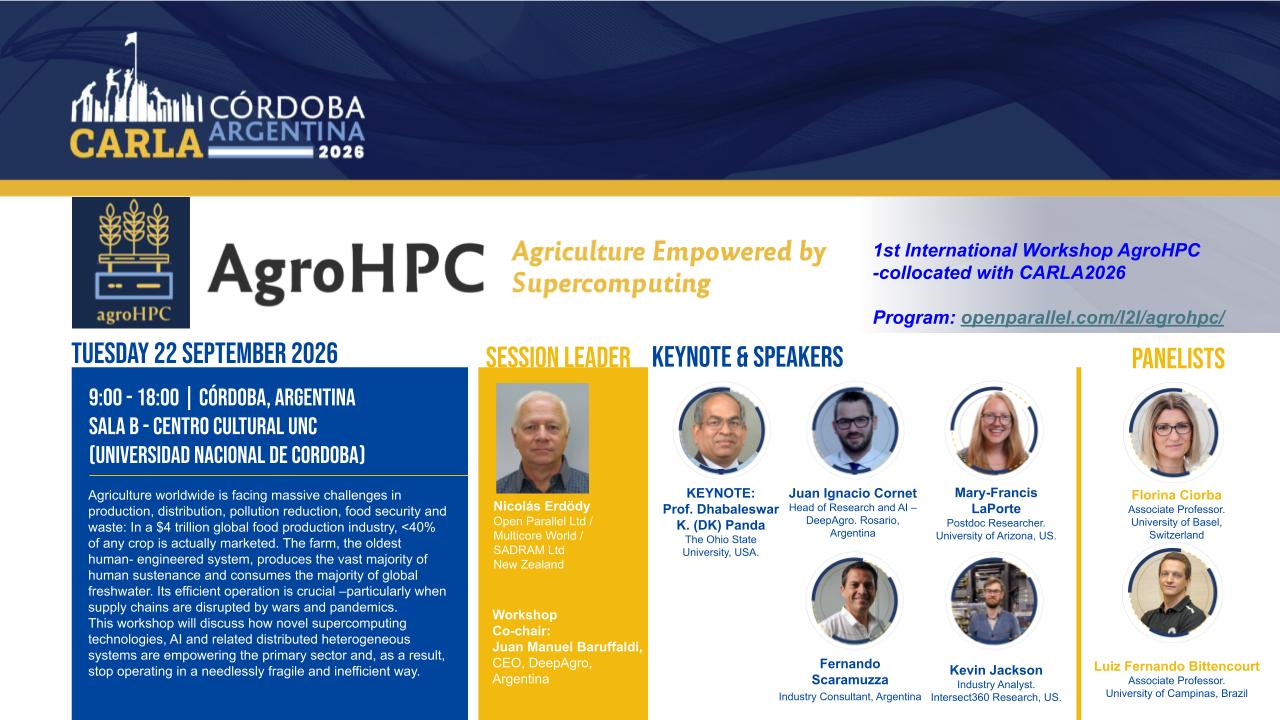
1st International Workshop on Agriculture Empowered by Supercomputing
Tuesday 22 September 2026 – Córdoba, Argentina.
Part of CARLA2026 – The Latin American High Performance Computing Conference.
Description of the workshop
Agriculture worldwide is facing massive challenges in production, distribution, pollution reduction, food security and waste: In a $4 trillion global food production industry, <40% of any crop is actually marketed. The farm, the oldest human- engineered system, produces the vast majority of human sustenance and consumes the majority of global freshwater. Its efficient operation is crucial –particularly when supply chains are disrupted by wars and pandemics.
This workshop will discuss how novel supercomputing technologies, AI and related distributed heterogeneous systems are empowering the primary sector and, as a result, stop operating in a needlessly fragile and inefficient way.
Following the “Agriculture Empowered by Supercomputing” successful meetings held at SC23 (Denver), SC24 (Atlanta) and SC25 (St. Louis) in the United States plus at ISC25 (Hamburg, Germany) and SCAsia 2026 (Osaka, Japan), we are looking forward to continuing expanding our community in Latin America through the AgroHPC workshop at CARLA2026.
—
Objective
Present HPC as part of a solution to complex interactions between e.g. climate change and adaptation; weather forecasting and high resolution climate models; financial and commodities markets; trade, supply chain and transportation; new algorithms and data science; plant breeding and genomics research; all intertwined with the strategic and operational decisions to be made at the farm. We hope that this workshop will inform end-users (farmers, corporations, governments) on how supercomputing could empower the primary sector while challenging technology colonisation concepts and discussing modular solutions adaptable to local conditions.
—
Programme
Tuesday 22 September 2026
v2.0 – Updated 15 Sept – Abstracts and Bio -see below.
9:00 – 9:10 – Opening
Co-chairs – Nicolás Erdödy – Juan Manuel Baruffaldi
9:10 – 9:35 – Introduction – Why AgroHPC?
Nicolás Erdödy

9:40 – 10:30 – Keynote
“Tools and Services for AI-driven Digital Agriculture”
Professor Dhabaleswar K. (DK) Panda
The Ohio State University, USA.
10:30 – 11:00 – Coffee break
11:00 – 11:30 – “Real-Time Weed Detection on Moving Machinery: Lessons from 1M+ Hectares in Production”
Juan Ignacio Cornet, Co-founder, Head of Research and AI – DeepAgro – Argentina.
11:30 – 12:00 – “From Field Operations to Supercomputing: An Interoperable Edge-to-HPC Architecture for Integrating Multi-Machine and Contractor Data”
Fernando Scaramuzza, Ing Agr, MSc – Consultant, Argentina
12:00 – 12:30 – “A Tractor You Are Not Allowed to Open: Who Owns Agriculture’s Data Layer”
Kevin Jackson, Industry Analyst, Intersect360 Research, USA.
12:30 – 13:00 – Debate – AgriTech in LatinAmerica – How are farmers and industry in general responding?
J. Cornet, F. Scaramuzza, K. Jackson
13:00 – 14:30 – Lunch
14:30 – 15:15 – “Failure Risks and Mitigations for a Wide-Area Digital Nervous System”
Nicolás Erdödy. Director, Open Parallel Ltd. Project Lead, Listen to the Land. New Zealand.
15:30 – 16:00 – “Supercomputing enables crop improvement: practical use-cases in field-scape phenotyping and genomic prediction”
Mary-Francis LaPorte, PhD. Postdoctoral Researcher, University of Arizona, USA (video-conference)
16:00 – 16:30 – Coffee Break
16:30 – 17:45 – International Panel – “AgroHPC in Action”
“Operational Supercomputing for Agriculture: Scalable Architectures, Industry Adoption, and Data Sovereignty”
Prof DK Panda (US)
A/Prof Florina Ciorba (Switzerland)
A/Prof Luiz Bittencourt (Brazil)
Juan Cornet (Argentina)
Kevin Jackson (US)
Moderator: Nicolás Erdödy (New Zealand)
17:45 – 18:00 – Wrap up.
—
Abstracts
Keynote: “Tools and Services for AI-driven Digital Agriculture”
Professor Dhabaleswar K. (DK) Panda
The Ohio State University, USA.
Abstract: Artificial intelligence (AI) is transforming every sector of society. Digital Agriculture is one of the prime candidate domains to be transformed through AI during the coming decade. However, this requires a set of tools and services which can be integrated together in a plug-and-play manner for various crops and common activities in agriculture (such as weed/disease detection, precision spraying, understanding crop development and non-uniform emergence, timely harvesting, etc.) In this talk, I will provide an overview of tools and services designed by the NSF-AI Institute ICICLE (https://icicle.osu.edu/) to help agriculture communities to adopt AI with ease for the above-mentioned activities for diverse crops. End-to-end workflows and solutions using sensors, drones and tractors to carry out multiple tasks in AI-driven digital agriculture pipelines (such as data labeling and annotation, image segmentation, data transfers, model training, inferencing) will be highlighted. The effectiveness of these tools and services from field-level deployments will be demonstrated.
—
“Real-Time Weed Detection on Moving Machinery: Lessons from 1M+ Hectares in Production”
Juan Ignacio Cornet
Co-founder, Head of Research and AI – DeepAgro
Rosario, Argentina
Abstract: Selective spraying represents one of the most significant disruptions in modern agriculture since the shift to no-till farming, and stands among the first artificial intelligence applications on the edge to reach commercial scale. SprAI, DeepAgro’s retrofit system, performs real-time green-on-green weed detection with deep neural networks running on embedded hardware mounted directly on sprayer booms at speeds up to 18 km/h. Deployed on over 100 machines across Argentina, Brazil, Uruguay, and the US, it has covered over one million hectares with ~70% average herbicide savings. This talk presents the full edge-to-HPC loop behind that deployment: (1) neural network inference under hard latency, power, and environmental constraints; (2) data logistics from rural fleets, image storage, and IoT telemetry feeding a proprietary multi-year image corpus; (3) embedding-based similarity search over that corpus for dataset curation; and (4) GPU training and over-the-air model updates closing the cycle. We conclude by outlining the open challenges in bringing large-scale computing to agriculture and where the HPC community is best positioned to contribute.
—
“From Field Operations to Supercomputing: An Interoperable Edge-to-HPC Architecture for Integrating Multi-Machine and Contractor Data”
Fernando Scaramuzza, Ing Agr, MSc
Consultant, Argentina
Abstract: Precision agriculture generates growing volumes of data, yet their agronomic value depends on preserving, interpreting, and linking them throughout the production cycle. Within a single season, one farmer may rely on different contractors for planting, spraying, and harvesting, using machinery, displays, and platforms from multiple manufacturers. The resulting records differ in proprietary formats, semantics, units, spatiotemporal resolutions, and identifiers. This fragmentation prevents advisors from reconstructing a trustworthy field history and limits the downstream use of advanced analytics and artificial intelligence.
This work examines the problem through the Argentine production model and proposes an interoperable, offline-first reference architecture spanning the edge-to-HPC continuum. The approach includes adapters for heterogeneous sources and open standards; local validation, geospatial harmonization, and provenance capture at the edge; asynchronous synchronization under intermittent connectivity; and consolidation into a common repository supporting parallel workflows for quality control, multi-season integration, modelling, and machine learning. It preserves the farmer-farm-field-season-operation-machine-contractor relationship, supports farmer data sovereignty, and decouples field operations from any single vendor or platform.
The expansion of low-Earth-orbit satellite connectivity reduces a historical barrier, but connectivity alone does not solve semantic incompatibility, data quality, or governance. The central challenge is therefore not merely transporting data, but transforming fragmented records into traceable, computationally usable information. This contribution links a production model characteristic of the region with edge, cloud, and HPC infrastructures and outlines a validation agenda based on real-world datasets, data-quality metrics, ingestion time, and scalability.
—
“A Tractor You Are Not Allowed to Open: Who Owns Agriculture’s Data Layer”
Kevin Jackson
Industry Analyst, Intersect360 Research, USA.
Abstract: Agriculture has no line in our vertical taxonomy, so it sits outside every vendor roadmap and every funding line. The technology arrived anyway. A modern sprayer is an edge inference cluster, and independent field trials have beaten the manufacturer’s own published savings claims. Capability is not the constraint. Access, agronomic skill and data ownership are. Our research puts a large share of HPC and AI spending in smaller systems rather than flagship machines, and Latin America already owns the expensive layers. The data layer on top of them is not missing. It belongs to someone else. My recommendation: put it under agricultural cooperatives rather than vendors or ministries, on public compute the region already has, with data portability as a condition of sale.
—
“Failure Risks and Mitigations for a Wide-Area Digital Nervous System”
Nicolás Erdödy. Project Lead, Listen to the Land.
New Zealand.
Abstract: “Listen to the Land” (Whakarongo ki te whenua) is a design for a nation-wide sensor and analytics platform for fine-scale, continuous weather monitoring to support agriculture and climate resilience. Its scale requires supercomputer-level computation and communication. However, geographical dispersal and exposure to weather (winds up to 250 km/h, temperatures from -26C to 42C, rainfall up to 200 mm/hour) make failures possible that typical supercomputers will never see. This presentation describes the proposed system, surveys some of the failure modes and proposes mitigations for them.
—
“Supercomputing enables crop improvement: practical use-cases in field-scape phenotyping and genomic prediction”
Mary-Francis LaPorte, PhD
Postdoctoral Researcher, University of Arizona, USA
Abstract: Plant breeders are eager adopters of HPC and advanced large-scale data analysis techniques because these technologies have been shown to accelerate the selection of plants with advantageous traits. Crop improvement must keep pace with rising yield demands and simultaneous mounting environmental pressures, including floods, drought, heat, pests, and salty soils. This talk describes how plant breeders use HPC to find associations between genotypes and phenotypes, to predict plant phenotypes from genotype, and to simulate crop yield under varying environmental conditions. In particular, we will discuss use cases where HPC is currently being applied to crop improvement in Latin America, as well as opportunities for AI-enabled cloud computing to relieve bottlenecks in the breeding pipeline, such as with high-throughput phenotypic processing. These examples demonstrate resource-efficient approaches that make a practical difference in plant breeding programs.
—
Panel – “AgroHPC in Action”
DK Panda, Florina Ciorba, Luiz Bittencourt, Juan Cornet, Kevin Jackson – Moderator: N. Erdödy
Panel: Operational Supercomputing for Agriculture
This expert panel explores how edge-to-cloud architectures, resilient software stacks, and enterprise AI can transform Latin American agribusiness. Stripping away slides, leaders from academia and industry discuss overcoming rural infrastructure limits, driving commercial ROI, and building open, modular systems that ensure local data sovereignty.
Q1 (Infrastructure & Edge): How can edge-to-cloud computing architectures overcome harsh rural connectivity limits to deliver real-time intelligence at the farm level?
Q2 (Software & Scalability): How must software stacks and scheduling models evolve to process unpredictable, heterogeneous agricultural data efficiently?
Q3 (Market & Enterprise ROI): What commercial and operational models are needed to transform supercomputing from an academic exercise into a cost-effective utility for Latin American agribusiness?
Q4 (Data Sovereignty & Local Impact): How do we design modular, open-source architectures that guarantee data sovereignty and empower local producers rather than forcing reliance on proprietary platforms?
—
Speakers bio
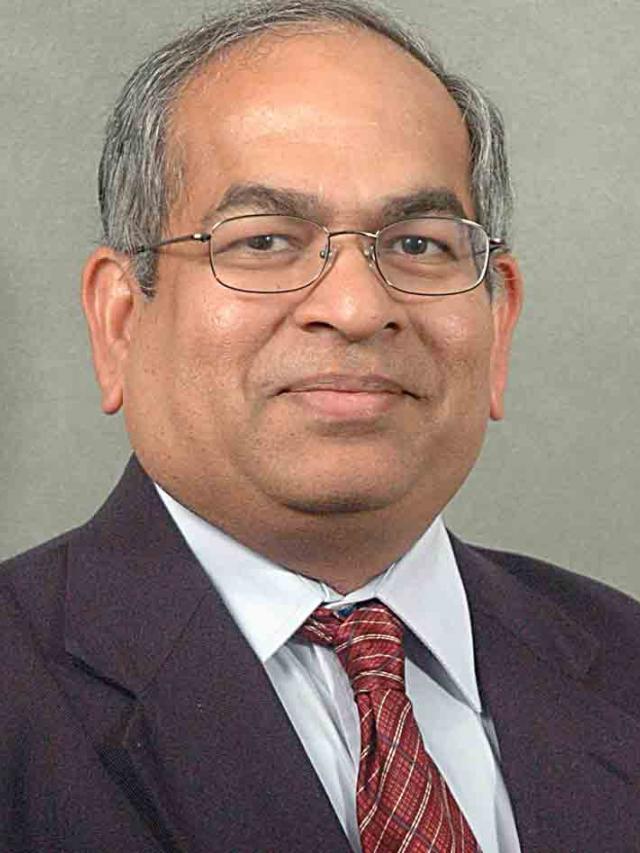
Professor Dhabaleswar K. (DK) Panda
The Ohio State University, USA.
DK Panda is a Professor and University Distinguished Scholar of Computer Science and Engineering at The Ohio State University. He is serving as the Director of the ICICLE NSF-AI Institute (https://icicle.ai). He has published over 500 papers. The MVAPICH MPI libraries, designed and developed by his research group (https://lnkd.in/gb-SPwsu), are currently being used by more than 3,500 organizations worldwide (in 94 countries). More than 2.0 million downloads of this software have taken place from the project’s site. This software is empowering many clusters in the TOP500 list. High-performance and scalable solutions for AI workloads from his group are available from https://lnkd.in/gc-HWyEd Similarly, scalable, and high-performance solutions for Big Data and Data science frameworks are available from https://lnkd.in/eDps4yYc. Prof. Panda is a Fellow of ACM and IEEE. He is a recipient of the 2022 IEEE Charles Babbage Award and the 2024 IEEE TCPP Outstanding Service and Contributions Award. More details about Prof. Panda are available at https://lnkd.in/geqs4-Ne.
—
Juan Ignacio Cornet
Co-founder, Head of Research and AI – DeepAgro
Rosario, Argentina
Juan Ignacio Cornet is Co-founder and Head of Research and AI at DeepAgro, an Argentine agtech company developing AI enabled solutions for agriculture. He leads applied R&D in computer vision, deep learning, and agentic AI systems for precision agriculture, spanning edge inference, UAV-based prescription mapping, and model deployment infrastructure.

—
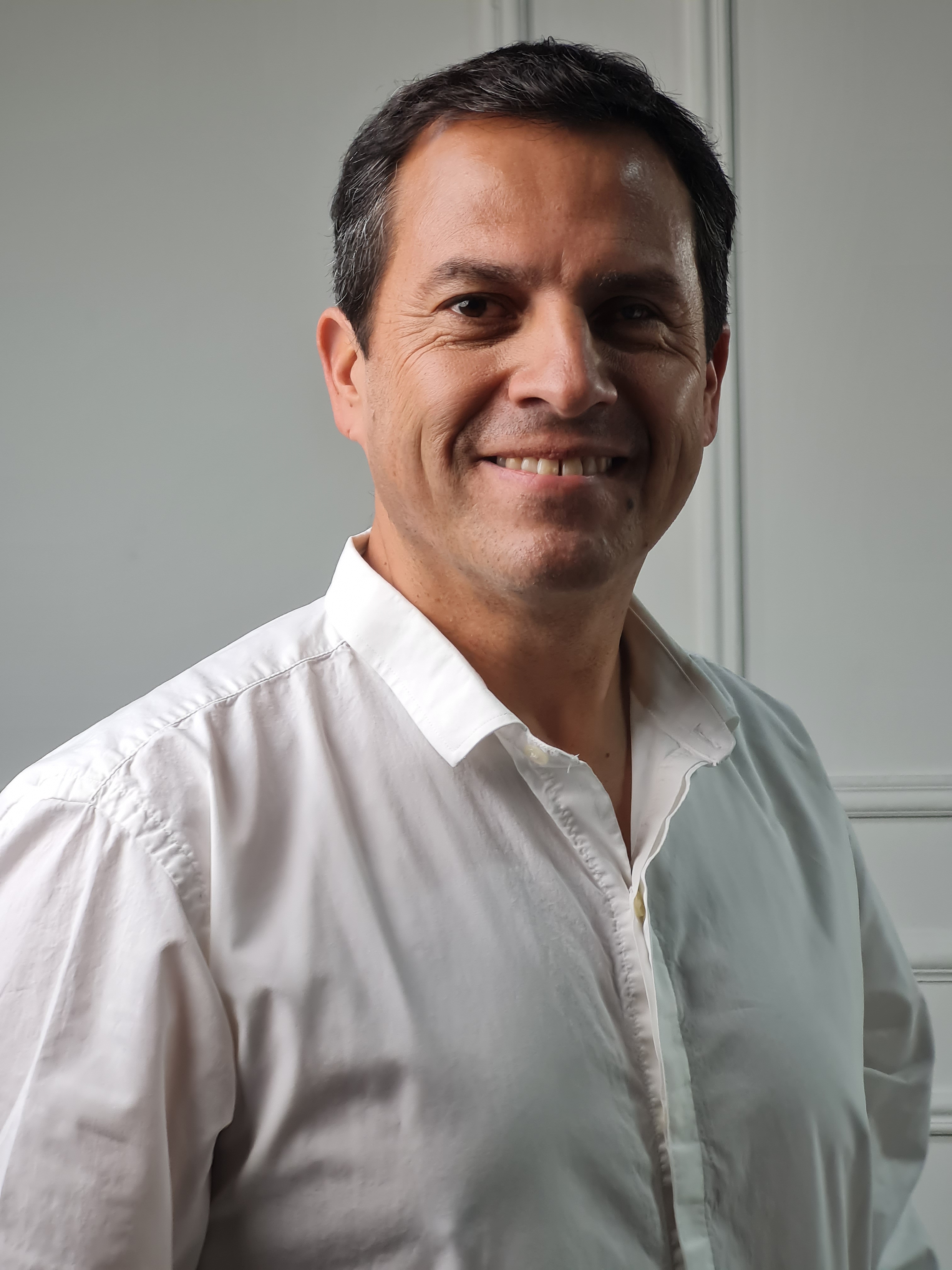
Fernando Scaramuzza, Ing Agr, MSc
Consultant, Argentina
Agricultural Engineer with over 20 years of experience in precision agriculture, agricultural mechanization, and digital transformation in farming. Specialised in data generation for decision-making, technology integration, and public-private partnerships, currently focusing on strategic consulting and AgTech solution development for industry enterprise.
From 2003 to 2024, he served as a researcher in the Precision Agriculture Group within the Agronomy Area at the INTA Manfredi Experimental Station. During this period, he coordinated the Structural Project: Development and Application of Mechanization, Precision, and Digitalization Technologies in Agriculture from 2016 to 2023. Additionally, he is a founding partner of the Latin American Association of Precision Agriculture (ALAP) and served as Vice President of the 2022 Latin American Congress of Precision Agriculture (CLAP2022).
—
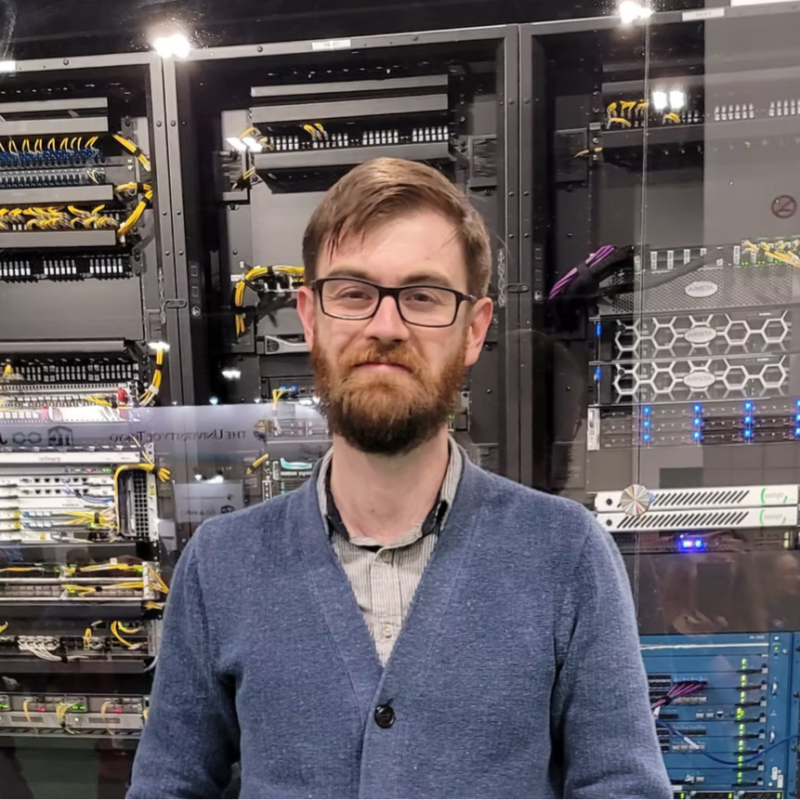
Kevin Jackson
Industry Analyst, Intersect360 Research, USA.
Kevin Jackson is an industry analyst at Intersect360 Research, where he covers HPC, AI infrastructure, quantum computing and data centers and works with CEO Addison Snell on the firm’s forecasts and end-user survey research. He writes the firm’s whitepapers and technical briefs and speaks on infrastructure and market trends.
—
Mary-Francis LaPorte, PhD
Postdoctoral Researcher, University of Arizona, USA
Mary-Francis LaPorte has a PhD in plant biology from the University of California, Davis, and is a recent alum of the Department of Energy’s Computational Science Graduate Fellowship. Her academic interests include plant breeding as an application for high performance computing.

—
Nicolás Erdödy, MEntr.
Nicolás Erdödy is the Founder and Director of Open Parallel Ltd., a globally distributed strategy and R&D consultancy specialized in next-generation high-tech ecosystems. Since 2010, Open Parallel has delivered bespoke technology projects and market development strategies for international clients—most notably contributing to the computing platform for the Square Kilometre Array (SKA) radiotelescope project between 2012–2019 under official selection by the New Zealand Government. The core knowledge developed for the SKA now powers Nicolás’ current initiative, “Whakarongo ki te Whenua” (Listen to the Land), a massive platform concept designed for New Zealand’s Agritech and primary sectors. Furthering this intersection of data and earth sciences, Nicolás created and leads the Birds of a Feather (BoF) series “Agriculture Empowered by Supercomputing,” featured at SC23 (Denver, CO), SC24 (Atlanta, GA), SC25 (St Louis, MO), ISC25 (Hamburg, Germany), and SCAsia26 (Osaka, Japan). Beyond his consultancy work, Nicolás is a Director and the Chief Commercial Officer (CCO) of SADRAM, Inc., a pioneering memory architecture company. He also serves as the Conference Director of Multicore World, a globally recognized annual summit held in New Zealand since 2012.
Nicolás holds a Master of Entrepreneurship from the University of Otago (Dunedin, New Zealand) and studied Hydraulics and Fortran at the School of Engineering, Universidad de la República (Montevideo, Uruguay).

—
Panelists
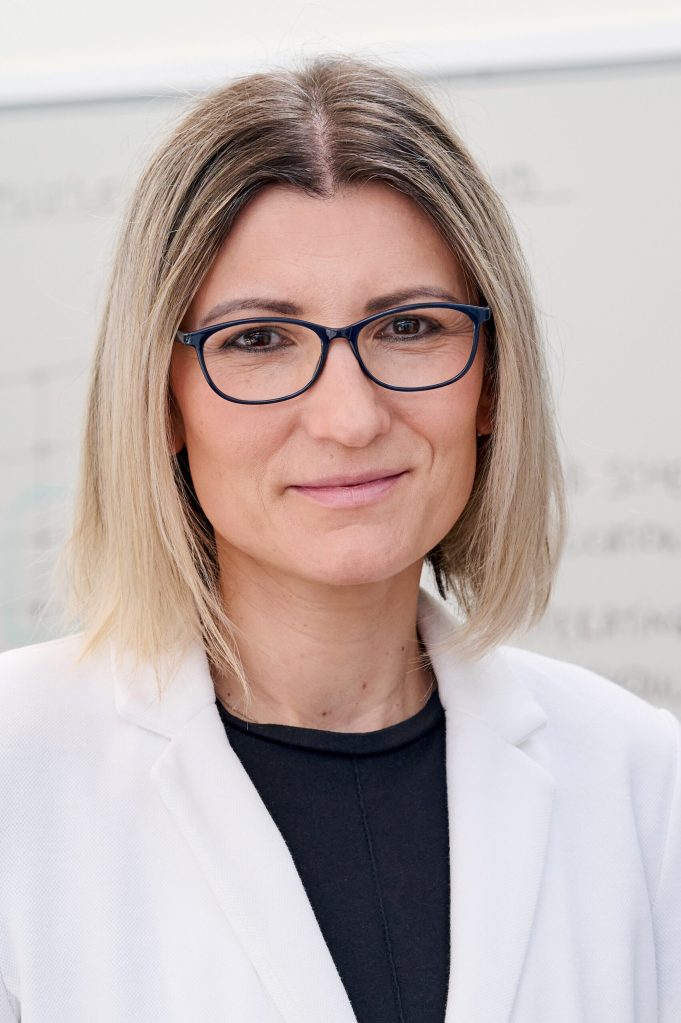
Florina Ciorba – Associate Professor at Universität Basel (Switzerland).
Luiz Fernando Bittencourt – Associate Professor, University of Campinas (Brazil).

Workshop Co-Chairs
Nicolás Erdödy (New Zealand).
Juan Manuel Baruffaldi (Argentina).
Workshop Venue
Sala B – Centro Cultural UNC, Duarte Quirós 140, 3rd floor
Córdoba, Argentina
Map – https://maps.app.goo.gl/UJjUgo6z13Q7TYVB6
Conference website – CARLA2026 – https://carlaconference.org/
Workshop page – AgroHPC at CARLA2026 – https://carlaconference.org/agrohpc/
Workshops page – https://carlaconference.org/program-workshops/
Contacts
Join the AgroHPC group in LinkedIn https://www.linkedin.com/groups/40938007/
Nicolás Erdödy nicolas.erdody@openparallel.com (Nueva Zelandia)
Juan Manuel Baruffaldi jbaruffaldi@deepagro.com (Argentina)


Sorry, the comment form is closed at this time.